2026/1/4 10:08:01
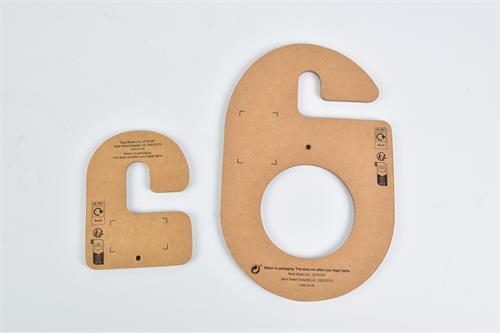
In the visual realm of apparel retail, every detail plays a part in the narrative. As people's eyes become accustomed to lingering over the lighting in shop windows, the cutting of garments, and the interior decor, a seemingly small yet profound change is quietly taking place in the most fundamental aspect of clothing display—the paper hanger hook. With its unique environmental philosophy, innovative design thinking, and excellent functionality, it stands out from the traditional world of plastic and metal, becoming a silent revolutionary leader in sustainable retail trends.
For a long time, clothing hangers, as the anonymous supporting role connecting clothing and display racks, have mostly been made of plastic or metal. However, driven by the global environmental protection wave and consumers' increasing awareness of sustainability, their drawbacks of non-degradability and high carbon footprint have become increasingly prominent. Paper clothing hangers have emerged as the times require. They are not a simple substitution for traditional materials, but a systematic innovation from source to end based on the concept of circular economy. Their emergence marks that the retail industry has begun to implement sustainability from macro slogans to every micro physical touchpoint.
The core competitiveness of paper hanger hooks primarily stems from the innovation in their material origins and craftsmanship. They are primarily made from high-strength recycled cardboard, pulp certified by the Forest Stewardship Council (FSC), or agricultural by-products such as sugarcane bagasse and bamboo fiber. Through advanced molding or corrugated structure reinforcement processes, these fibers are shaped into precise structures with excellent bending and tear resistance. Their load-bearing capacity has undergone rigorous mechanical design, enabling them to easily support the weight of most spring and summer clothing, as well as autumn and winter knitted apparel, thus overturning the inherent impression of paper products as "fragile". At key stress points, such as the hook's bend and hanging opening, reinforcement is often achieved through the addition of laminations, special folding structures, or bio-based composite material reinforcement sheets, ensuring reliability and durability in use, fully capable of meeting the multiple usage demands within the retail cycle.
From the perspective of functionality and user experience, the paper hanger hook demonstrates a high degree of adaptability and brand integration. It can be precisely die-cut into any shape, perfectly fitting the brand's visual logo, becoming a mobile brand billboard. Whether it's minimalist lines or complex patterns, they can be clearly presented through high-definition printing or eco-friendly ink hot stamping. Its surface feels warm and skin-friendly, avoiding the coldness of metal and the slippery feel of plastic, giving the product a natural, high-end display quality. More importantly, it is extremely lightweight, significantly reducing the logistics burden and storage space for stores, while providing convenience for store staff to adjust displays.
However, its fundamental value lies in the sustainable closed loop throughout the entire lifecycle. Unlike plastic hooks, which are derived from fossil fuels and difficult to degrade, paper hooks possess natural environmental advantages from their inception. After use, they can be treated as clean paper waste, directly entering the existing waste paper recycling system, being repulped, and re-entered into the production cycle, truly realizing "from cradle to cradle". Even if they are inadvertently discarded into the natural environment, their degradation process is much faster than that of plastic, without the concern of microplastic pollution. For brands pursuing green certifications (such as B Corp) or adhering to ESG (Environmental, Social, and Governance) principles, fully adopting paper hanger hooks is a practical and tangible action to reduce Scope 3 (indirect emissions) carbon footprint and fulfill environmental commitments.
In practical applications, paper hanger hooks have evolved from concept to widespread practice. Fast fashion brands utilize them for in-store display of a large number of seasonal products, achieving controllable costs and a unified image. High-end designer brands customize special paper hooks with an artistic feel, using their unique textures and minimalist designs to reinforce the brand's low-key luxury and environmental advocacy. In online retail, biodegradable paper hooks included with packages also reflect the brand's comprehensive consideration for the environmental experience of end consumers.
Looking ahead, with the advancement of material technology and digitalization, the evolutionary path of paper hanger hooks will become more diverse. Smart hooks integrated with scannable QR codes or NFC chips can facilitate real-time inventory management and deliver product stories directly to consumers. Exploring the inclusion of seed paper components allows the hooks, after use, to be transformed into green plants through proper disposal, completing a romantic life cycle. The use of color-changing ink to indicate the load-bearing limit or usage duration adds functional fun.
In summary, the paper hanger hook is far more than just an eco-friendly accessory. It is a physical extension of the retail brand's values, a micro-practice of circular economy thinking, and a light yet sturdy bridge connecting responsible production with conscious consumption. In an era where sustainability has become a core competency, choosing such a hook signifies that the brand chooses to participate in shaping the future of the industry in a humble yet determined manner - on this small hook, what is hung is not only clothing, but also a solemn commitment to the Earth.